R
Rutava SolutionsMVP or full build: how to decide before you spend
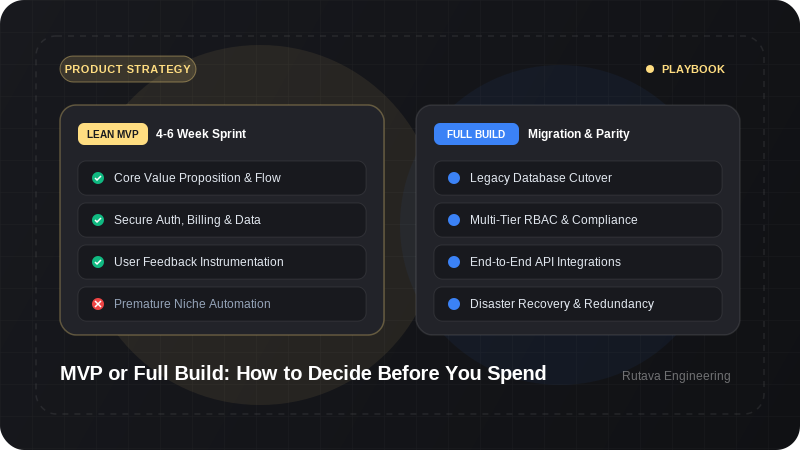
Most founders overbuild the first version. Here is the test we run with clients to decide what belongs in v1 and what can wait.
Intel • GuideRead Article
Custom web application development for businesses that need more than a standard website.
We design and develop custom web applications that help businesses manage operations, serve customers, automate workflows, and turn complex processes into practical digital products.
A web application is built around what your business needs to do, not just what a template allows. We can develop customer portals, business management systems, SaaS products, dashboards, marketplaces, internal tools, booking platforms, and other browser-based applications tailored to your workflows.
Our web application development service can cover everything from a focused MVP to a larger business platform. Depending on the requirement, an application may include user accounts, role-based access, dashboards, forms, search, payments, notifications, reports, document generation, third-party integrations, and administrative controls.
We start by understanding the business process, users, required features, and practical constraints before deciding how the application should be built. The project is then broken into clear stages such as requirements, user flows, interface design, development, testing, deployment, and post-launch support. This helps reduce unnecessary features and keeps the first version focused on the problems that matter most.
Depending on the project, we can work with modern web technologies and connect applications with services such as payment gateways, communication platforms, business APIs, databases, analytics tools, and other third-party systems. The technology choice is based on the application's requirements rather than adding technical complexity for its own sake.
Custom web application development is suitable for founders building a new digital product, established businesses replacing manual workflows, teams that need internal software, and organizations that need a customer-facing portal or business platform. If you only need a simple informational website, a standard website may be a more practical option.
The cost depends on factors such as the number of user roles, application complexity, custom workflows, integrations, design requirements, security needs, reporting, payment functionality, and whether the project is an MVP or a larger production platform. We can review your requirements and provide a project estimate based on the actual scope rather than using a one-size-fits-all price.
You do not need a complete technical specification to get started. Tell us what you want the application to do, who will use it, and what problem you are trying to solve. We can help translate that requirement into a practical scope, development approach, and estimated project plan.
Multi-property booking, inventory and payments in one platform.
Launch a multi-vendor marketplace without rebuilding the basics.
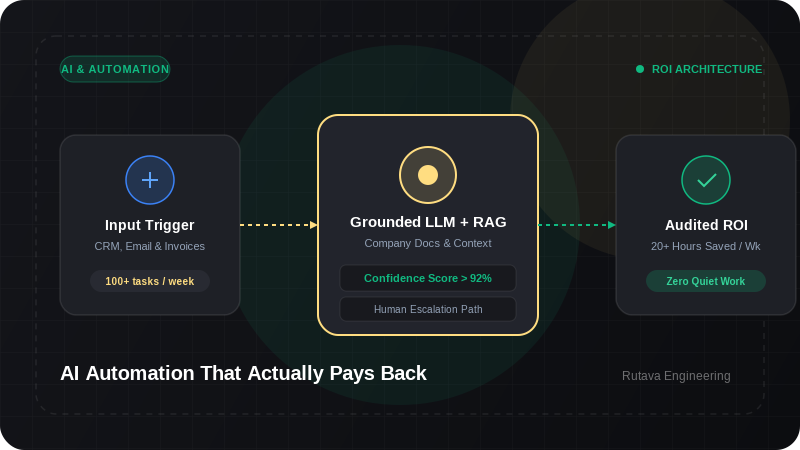
A grounded AI agent that answers from your own documents.
Pipeline, clients and delivery tracking built for service businesses.
Web application development involves creating interactive software that users access through a web browser. Unlike a basic informational website, a web application can include accounts, dashboards, business workflows, databases, reports, payments, integrations, and other application-specific functionality.
Yes. We can plan and develop web applications around your specific business process, users, features, and operational requirements instead of forcing the business into a pre-built template.
There is no single price because project complexity varies significantly. User roles, features, integrations, design requirements, security, reporting, payments, and the size of the initial release can all affect development cost. We can provide an estimate after understanding your requirements.
The timeline depends on the application's scope and complexity. A focused MVP can require substantially less work than a multi-role business platform with integrations and advanced workflows. The timeline is normally estimated after the key requirements and deliverables are defined.
Yes. A SaaS MVP can be structured around the core workflow needed to validate the product, with features such as user accounts, subscriptions, dashboards, role-based access, and administration included when required.
Yes. Where an external service provides a suitable API or integration method, a web application can often connect with services such as payment gateways, communication platforms, accounting systems, CRMs, analytics tools, and other business software.
Source-code ownership and handover terms should be defined in the project agreement. We can structure projects so the client receives the agreed project source code and relevant access at the appropriate handover or milestone stage.
Post-launch support can be included according to the project scope and support arrangement. The specific coverage, duration, response expectations, maintenance, and future development can be defined before the project begins.
No. You can start with a business-level description of what you want to achieve, who will use the application, and the problems you currently face. The requirements can then be converted into features, workflows, and a practical development scope.
Most founders overbuild the first version. Here is the test we run with clients to decide what belongs in v1 and what can wait.
Chatbots are easy to demo and hard to justify. A practical framework for picking automation projects with measurable return.
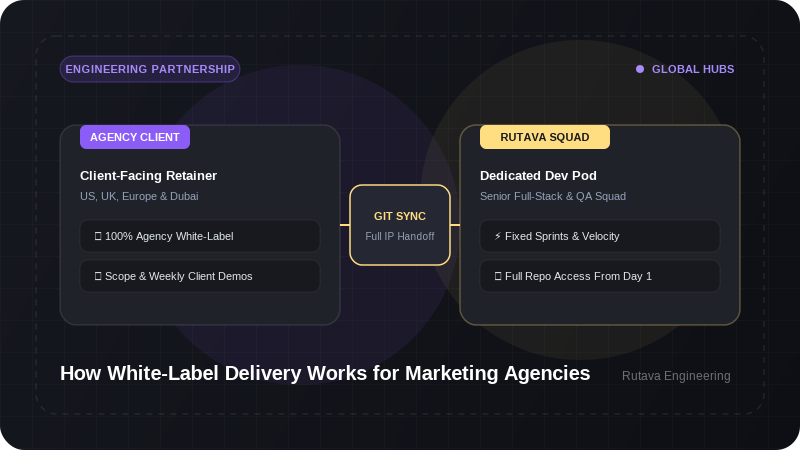
What agencies in the US, UK, Europe and Dubai should expect from an offshore engineering partner — and what to insist on.