R
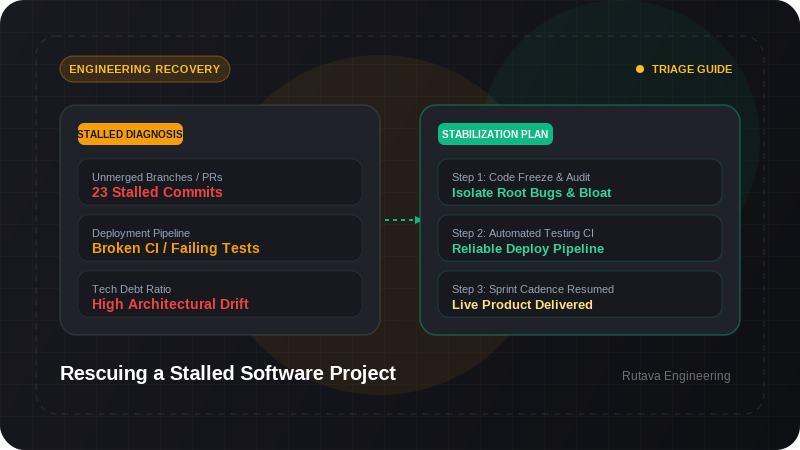
Rutava SolutionsRescuing a stalled software project
A repeatable audit process for projects that are late, unstable, or handed over half-finished by a previous vendor.
Intel • GuideRead Article
Business-focused custom software development for workflows, operations, customer experiences, and growing digital businesses.
Off-the-shelf software does not always fit the way your business actually works. We design and develop custom software around your processes, users, and business requirements, whether you need an internal management system, customer-facing platform, SaaS product, business automation tool, or desktop application.
We start by understanding what you need the software to accomplish, who will use it, what problems exist today, and how the system should fit into your daily operations. From there, we plan the features, user experience, development approach, integrations, and delivery milestones.
Custom software can range from a focused business application to a larger platform connecting multiple teams and workflows. Depending on the requirement, solutions can include dashboards, admin panels, customer portals, inventory systems, task management, CRM workflows, billing systems, booking platforms, SaaS products, APIs, and desktop applications.
We keep the process practical and transparent: understand the requirement, define the first usable version, map the important workflows, design the experience, develop in milestones, test the system, deploy it, and provide post-launch support. This helps businesses avoid spending heavily on features that are not necessary for the first release.
The technology stack is selected according to the product rather than forcing every project into the same architecture. We can work across modern web, mobile, backend, database, and desktop technologies where they are appropriate for the project's requirements, budget, users, integrations, and long-term maintenance.
A useful custom application should reduce unnecessary work, make information easier to access, and give people a clearer way to complete their responsibilities. We focus on practical workflows and understandable interfaces instead of adding technical complexity simply because it is possible.
Multi-property booking, inventory and payments in one platform.
Launch a multi-vendor marketplace without rebuilding the basics.
A grounded AI agent that answers from your own documents.
Pipeline, clients and delivery tracking built for service businesses.
Custom software development means creating software specifically around a business's processes, users, and requirements instead of adapting an off-the-shelf product to fit. It can include web applications, desktop software, mobile applications, business management systems, SaaS platforms, APIs, and workflow automation.
Custom software can make sense when existing tools do not support an important workflow, require too many workarounds, cannot integrate with other systems, or need capabilities that are specific to the business. It is worth comparing the cost and complexity of custom development with available ready-made software before starting.
There is no single price for custom software because cost depends on the number of users, features, platforms, integrations, design requirements, security needs, development complexity, and ongoing support. We can review your requirements and provide a project estimate based on the scope.
The timeline depends on the scope and complexity of the application. A focused MVP with a limited number of workflows can be delivered faster than a large multi-module platform. Requirements, integrations, design changes, testing, and deployment requirements can also affect the timeline.
Yes. Custom software can be designed around industry-specific workflows such as retail, education, professional services, logistics, healthcare operations, manufacturing, hospitality, and other business environments. The exact features should be defined around the organization's actual workflow rather than assuming every business in an industry works the same way.
Yes. Starting with an MVP can be a practical approach when the complete product has many planned features. We can identify the core workflows, build the first usable version, collect feedback, and plan subsequent functionality based on actual requirements.
Yes. Depending on the systems involved, custom software can integrate with APIs, payment gateways, communication services, databases, accounting systems, shipping platforms, authentication providers, and other third-party services. Integration feasibility depends on the capabilities and access provided by each external system.
Ownership and intellectual-property terms should be clearly defined in the project agreement. Where the agreed terms provide for transfer of the developed software and source code, the applicable ownership and repository access can be transferred to the client.
Post-launch support can be discussed as part of the project. Depending on the agreement, support may cover bug fixes, maintenance, updates, deployment assistance, integrations, and future improvements.
Yes. Desktop software can be developed for Windows, macOS, or Linux depending on the application's requirements and preferred technology. The target operating systems should be established during the planning stage.
Start by sharing what your business does, the problem you want the software to solve, who will use it, the main features you need, and any existing systems that must be connected. We can use this information to understand the scope and discuss the appropriate development approach and estimated cost.
A repeatable audit process for projects that are late, unstable, or handed over half-finished by a previous vendor.
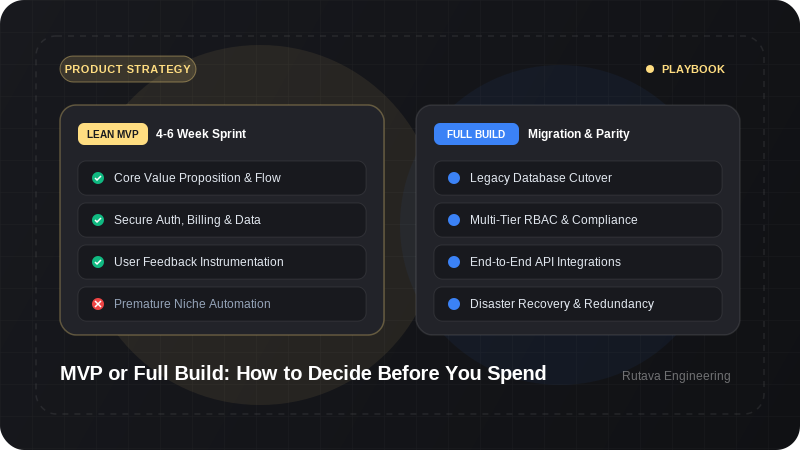
Most founders overbuild the first version. Here is the test we run with clients to decide what belongs in v1 and what can wait.
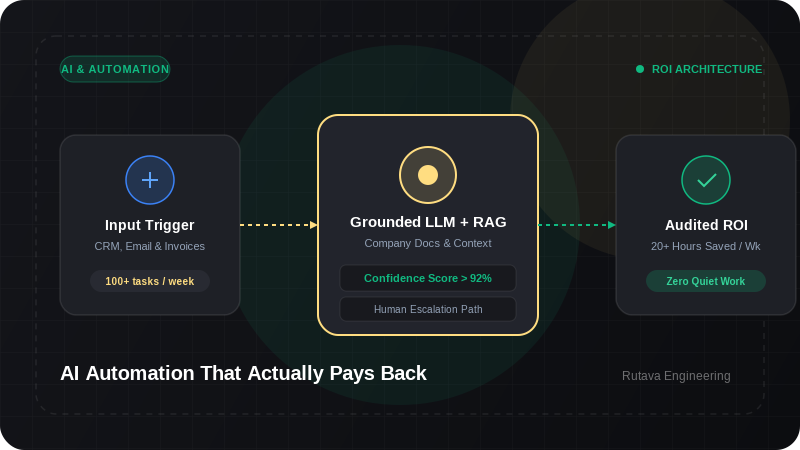
Chatbots are easy to demo and hard to justify. A practical framework for picking automation projects with measurable return.